
What You Might Not Know About the Letters LGBTQIA+
I'm not going to define every letter in this post. That would take a while, and honestly, there are people and organizations who have done that work far better than I could here. I'll point you toward them later in this post. What I will do is try to explain the point of those letters, especially if you've spent your whole life in spaces that were predominantly heterosexual and cisgender and never really had to think about any of this.
The letters are words. The words exist because people needed language to understand themselves. That's it. It's not a hierarchy. It's not a political agenda. It's not a moral framework you have to accept or reject. It's people finding a way to name who they are, what they feel, what makes them feel most themselves, most comfortable, most loved by their own reflection. Not for anyone else. For themselves.
When we can respect that, when we can give people the space to understand their own preferences, desires, identities, and ways of moving through the world, I think that's the thing worth aiming for.
On the Fear and the Hate
There's a lot of history behind why so much fear and anger exists around queerness. I'm not going to unpack all of it here, but I do think one thread worth pulling is this: some of the hostility comes from people who were never allowed to know themselves. Who were handed a mold early and told to fit it, and did. And when they see someone living freely in ways they were taught to suppress or fear, it stings. That sting can turn into anger fast, especially when there's no self-awareness around where it's coming from. That's not a universal explanation. But it's a real one.
There's also a broader cultural discomfort with people who simply don't conform. Not just queer people. Anyone who steps outside the expected script tends to attract suspicion. We're socially wired, in a lot of ways, to read difference as threat. That wiring made sense at some point in human history. It doesn't serve us as well now.
I also think it's worth noting that different kinds of sexuality and gender fluidity aren't modern inventions. They show up across cultures and throughout history in ways that get conveniently forgotten. This isn't new. What's relatively new is the visibility, and for a lot of people, visibility feels like provocation, even when it isn't.
And here's the thing I think of when I think of drag queens, who don’t have to be queer, but still often create fear in some people: people accept Joan of Arc. They love Mulan. They celebrate stories about people who refused to fit the box they were given and fought for something real. A drag queen is doing the same thing. They are still on the battlefield, fighting a fight. The discomfort some people feel says more about the audience than the performer.
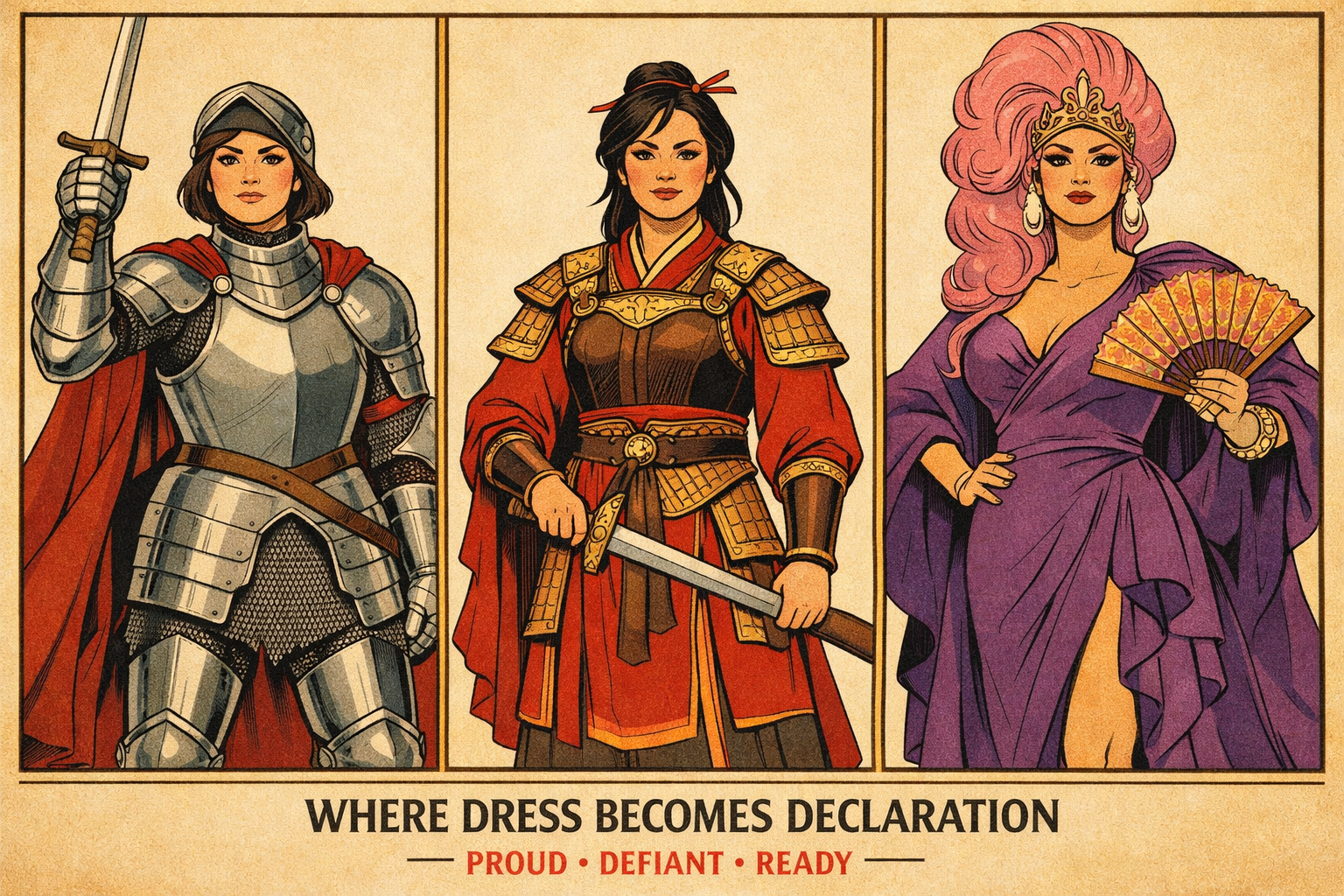
Image generated using ChatGPT 2025
A Note on Furries
I want to include this here because it's a good example of how misinformation breeds fear, and how fear gets used to dismiss and dehumanize people.
Furries are people who have an interest in anthropomorphic animal characters, meaning animals with human traits, like you see in cartoons, comics, and folklore going back centuries. Some people engage with that through art, costume, storytelling, online communities, or just as a fandom. The furry community is creative, diverse, and largely built around imagination and self-expression.
A common misconception, one that gets spread deliberately in a lot of cases, is that being a furry is sexual in nature or that it involves attraction to actual animals. This is not what furries are. The community, like most communities, contains a wide range of people and interests, but at its core, it is a creative and social subculture. Conflating it with bestiality is not only wrong, it's a tactic. It's the same tactic that has been used against gay people, trans people, and other communities for a long time: attach something horrifying to a group, repeat it enough, and watch people stop asking questions.
If someone in your life identifies as a furry, or you encounter the community and feel unsure, the answer is the same as it is for anything else in this post. Learn before you judge. Ask respectful questions. Don't let a meme be your primary source. Here is a good starter: https://furscience.com/resources/
Furries are people. That's the whole point.
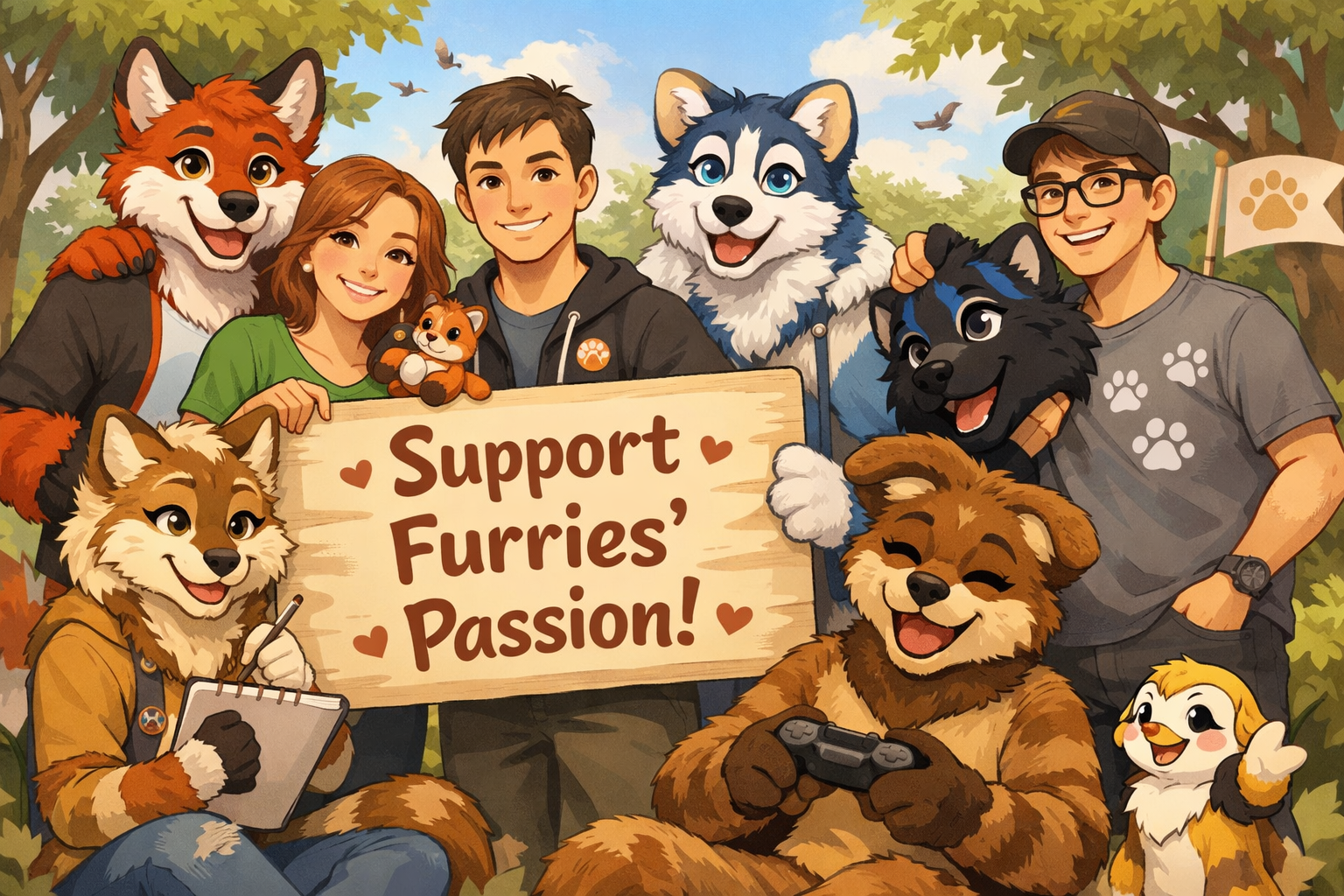
Image generated using ChatGPT 2025
These Lists Are Not Finished, and That's Okay
Language evolves because people evolve. The glossaries and resources below are good starting points, not final answers. They'll be updated over time as understanding grows and terminology shifts. You don't need to bookmark them and check for updates every morning. Just know they exist, and come back when you need them.
There are a lot of reasons someone might be looking for this kind of resource. Maybe a child, sibling, parent, or friend just came out and you want to show up for them well. Maybe you yourself are trying to understand something about who you are. Maybe you just want to be less ignorant in a conversation. All of those are legitimate reasons to be here.
One thing I want to be clear about: it is not a queer person's job to educate you. It's not their responsibility to make themselves legible to you, to explain their existence, to be patient with your learning curve. That's what resources like these are for.
Here are some places to start:
YouTube is also full of thoughtful content on this. And many universities have dedicated LGBTQIA+ resource centers worth exploring. Some intentionally do not, which is its own statement.
A Note on My Own Limitations
I am not fully informed on every topic in this space. I don't say that as a disclaimer to dodge responsibility. I say it because it's true, and I think it matters to name it. If something in this post is wrong, outdated, or accidentally perpetuates a stigma, I want to know. Please contact me directly. I take seriously the impact that misinformation can have, even when it's unintentional, and I'll do what I can to correct it and make amends where needed.
Part of why I write things like this is because I work closely with a lot of queer people, and I have friends who identify in many different ways. I myself don't fit neatly into a box or a label. And I feel like I have enough platform and enough bandwidth to take some of this on so that the people I love don't have to. They shouldn't have to spend their energy defending who they are or explaining themselves to people who could just as easily look it up.
That's what this is. A starting point. Go look it up.
Want to learn more? Have an idea for a blog topic? Reach out!
I personally recommend these excellent books:
**If you purchase these books using these links, then I will receive a small commission:
EMDR: If you are working through trauma and considering EMDR, 5 hrs 2 mins. (Link here)
If you want a more clinical approach + self-help tips written by the creator of the modality. 12 hrs 2 mins (Link here)
Panic and Severe Anxiety: If you want a step-by-step structure to help end panic attacks, I’ve seen this book change lives. 6hr 19 mins. (Link here)
General Emotional Intelligence: Simple advice we all need to hear again. 3hr 44 mins. (Link Here)
For adult children of emotionally immature parents. 6hr 50mins. (Link Here)
IFS “Parts work”: If you have an imagination and are ready for deep work, and want to increase self-compassion. 8 hrs 10 mins. (Link Here)



This handout breaks down 7 early warning signs of psychosis in language that actually makes sense to young people.
No clinical jargon, no scare tactics — just clear, relatable descriptions a high schooler or college student can read and recognize.
Includes a plain-language reminder that these signs don't equal a diagnosis, and a simple prompt to talk to a trusted adult. Print it, post it, or share it digitally.
-For Canva copy to edit colors, etc., please email us. Pricing slightly increases for this featured version.